Introduction: Why Cloud Skills Matter for Freshers Today
Cloud computing is no longer optional knowledge in IT.
Most modern applications—websites, mobile apps, enterprise systems—run on the cloud.
Indian IT companies, both service-based and product-based, expect freshers to understand cloud fundamentals, even for entry-level roles. You may not manage cloud infrastructure on Day 1, but you must understand how applications are deployed and scaled.
This article explains cloud computing basics clearly and simply, without jargon.
What Recruiters Mean by “Cloud Knowledge” for Freshers
When recruiters mention cloud skills for fresher roles, they usually do not mean advanced configuration or deep infrastructure expertise. In most cases, they are looking for candidates who understand core cloud concepts, have clarity on how applications run on the cloud, are familiar with common cloud services, and show the ability to learn cloud tools on the job.
Basic awareness and clear understanding matter far more than memorizing complex commands or holding advanced certifications.
1. Understanding What Cloud Computing Is
Cloud computing means using computing resources over the internet instead of owning physical hardware. These resources include:
Servers
Storage
Databases
Networking
Software
Instead of buying servers and setting them up in an office, companies rent these resources from cloud providers and use them on demand.
You use cloud computing daily:
Email services
Online storage
Video streaming
Online banking systems
2. Cloud Service Models Every Fresher Must Know
Every IT fresher should be familiar with the three basic cloud service models. Infrastructure as a Service provides virtual machines, storage, and networking where companies manage their own operating systems and applications. Platform as a Service offers ready-made platforms that allow developers to build and deploy applications without worrying about underlying infrastructure. Software as a Service delivers complete applications over the internet that users can access directly.
You should be able to explain where each model is used with simple, real-life examples. This is a common interview expectation.
3. Basic Cloud Architecture Concepts
Freshers are expected to understand how a basic cloud setup works. This includes knowing what virtual machines are, how storage is used, and how users access applications hosted on the cloud. Deep networking knowledge is not required, but you should know how an application is hosted, how users connect to it, and where data is stored.
This understanding helps freshers relate their coding or testing work to real project environments.
4. Cloud Storage and Databases: An Entry-Level View
Data handling is central to most IT roles. Freshers should understand the difference between file storage and databases, why backups are important, and basic ideas around data availability. Many real-world issues in projects involve storage limits, access permissions, or missing backups. Knowing the basics helps freshers respond better in support and project discussions.
5. Security and Access Basics
Security is a shared responsibility in the cloud. Freshers should understand why access control matters, what permissions mean, and why login credentials must be protected. While you are not expected to design security systems, awareness of security risks is critical and is often tested during interviews.
6. Deployment Basics: How Code Goes Live
In many entry-level roles, freshers assist with deployments or support deployed applications. You should understand what deployment means, the difference between development and production environments, and why configuration matters. This knowledge helps connect coding skills with real-world usage and system stability.
7. Cloud Knowledge Across IT Roles
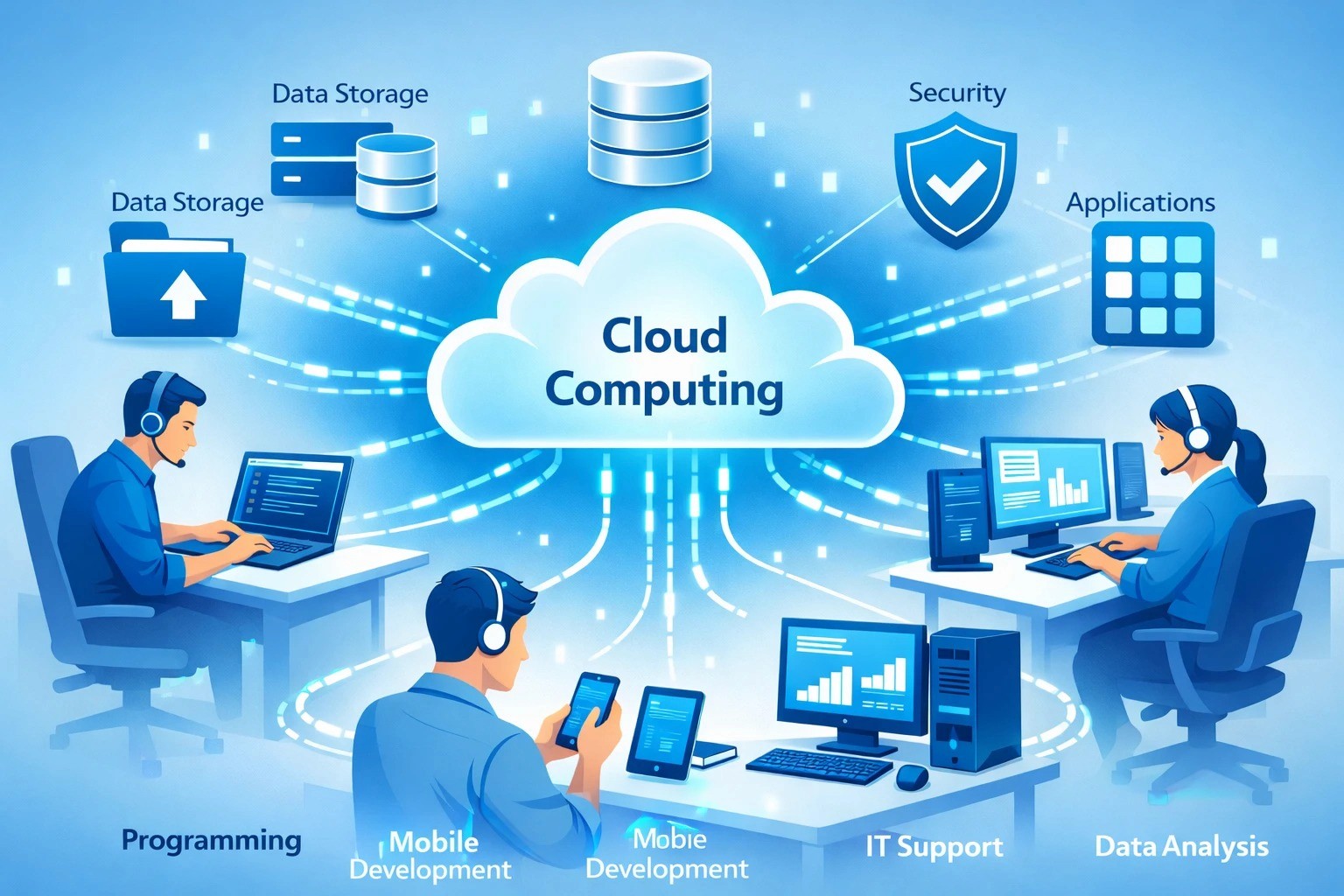
Cloud basics are useful across different IT roles. Developers use the cloud to deploy and test applications. Testers validate cloud-hosted systems. Support teams monitor and troubleshoot cloud-based environments. Data professionals work with cloud-hosted databases and analytics tools. This is why cloud knowledge is considered a foundational skill rather than a specialization.
8. Certifications vs Practical Understanding
Certifications can help build awareness, but Indian companies place more value on practical understanding and hands-on exposure. Freshers who can explain concepts clearly and demonstrate small cloud-based work often perform better in interviews than those who only hold certificates without practice.
Learning Support and Skill Development
Many freshers build their cloud fundamentals through structured learning and guided exposure. Skill development organizations such as VibrantMinds Technologies Pvt Ltd support fresh graduates by helping them understand cloud concepts in a practical, industry-aligned manner. Such support helps bridge the gap between academic learning and real project expectations in the Indian IT market.
Final Thought
Cloud computing is now part of everyday IT work. As a fresher, your focus should be on understanding the basics, building clarity on concepts, and being ready to learn further on the job. A strong foundation in cloud computing makes you relevant across multiple roles and opens up broader career opportunities in the Indian IT industry.