
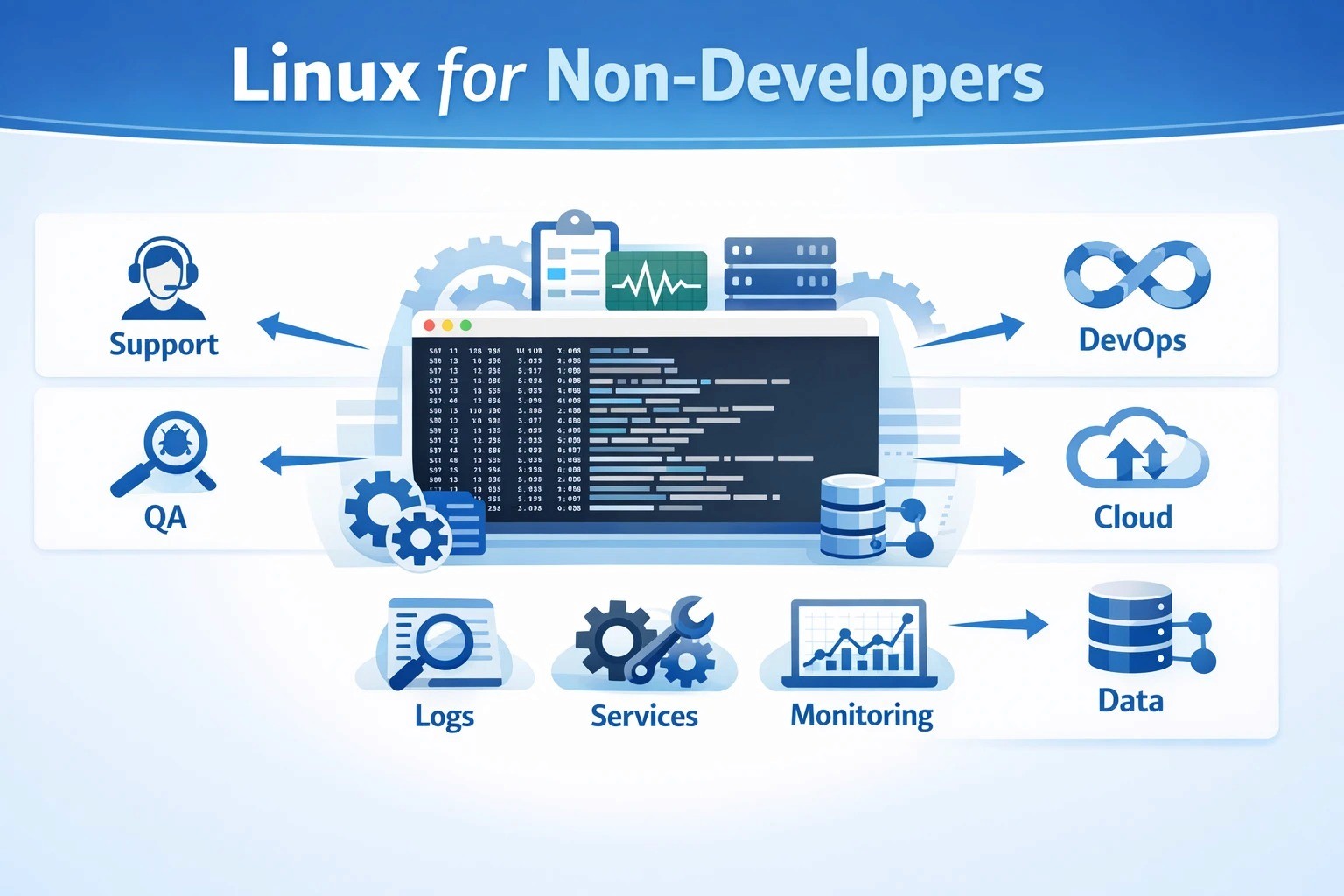
Many IT freshers believe Linux is only for hardcore developers or system administrators. This is not true anymore. In today’s Indian IT industry, Linux is used across almost every technical role, including support, testing, DevOps, cloud operations, data roles, and even cybersecurity.
You may not write production code, but if you work in IT, you will interact with Linux systems sooner or later. That is why Linux basics are no longer optional—they are a career advantage.
Linux Is the Backbone of Modern IT Systems
Most enterprise systems run on Linux. This includes:
application servers
cloud virtual machines
containers and Kubernetes clusters
databases and middleware
monitoring and logging systems
In many Indian service-based firms, client systems commonly run on Linux servers. Product companies and startups also prefer Linux because it handles scale and reliability well. When you know basic Linux commands, you can see how the system actually works, rather than working blindly without understanding what’s happening in the background.
Non-Dev Roles Still Work Inside Linux Environments
Even if your role is not “developer,” Linux still appears in daily work.
Support engineers check logs, restart services, and verify disk or memory usage.
QA and testers deploy builds, verify configurations, and validate application behavior on Linux servers.
DevOps and cloud engineers automate deployments, monitor systems, and troubleshoot failures—mostly on Linux.
Data and analytics roles often run jobs, scripts, or tools on Linux servers.
Without Linux basics, these tasks become stressful and slow. With Linux basics, they become manageable.
Linux Basics Improve Troubleshooting Skills
Most real production issues are not solved by writing new code. They are solved by:
checking logs
verifying processes
checking disk space or permissions
confirming network connectivity
understanding configuration files
Linux teaches you to observe systems calmly and logically. This mindset is valuable in every IT role. Managers trust freshers who can diagnose problems instead of escalating everything immediately.
Linux Knowledge Reduces Dependency on Others
Freshers often struggle because they depend on someone else for simple tasks:
“Can you check the logs for me?”
“Can you restart the service?”
“Can you tell me why this job failed?”
Basic Linux knowledge allows you to handle these tasks independently. This builds confidence and makes you look reliable, even in your first year.

What Linux Basics Freshers Actually Need (Not Everything)
You do not need to master Linux internals. Focus on practical basics:
navigating directories (
ls,cd,pwd)viewing files and logs (
cat,less,tail)understanding permissions (
chmod,chown)checking processes and services (
ps,top,systemctl)checking disk and memory (
df,free)basic shell commands and pipelines
These are enough to survive and grow in most entry-level IT roles.
Linux Knowledge Helps Career Transitions
Many freshers start in support or testing roles and later move into:
DevOps
cloud engineering
SRE
backend development
Linux basics make this transition smoother. You don’t start from zero. You already understand how systems behave in real environments.
Why Indian Employers Value Linux-Aware Freshers
Indian IT teams work with global clients, large systems, and tight SLAs. They prefer freshers who:
are comfortable in Linux environments
can follow runbooks and commands
understand logs and failures
don’t panic when terminals are involved
This applies to both service companies and product firms.
Conclusion
Linux is not just a developer tool. It is a workplace skill.
For IT freshers in India, learning Linux basics improves confidence, problem-solving ability, and career flexibility. Even if you never write core application code, Linux will help you understand systems, fix issues faster, and grow beyond your initial role.
If you want long-term stability in IT, start with Linux basics early.

