
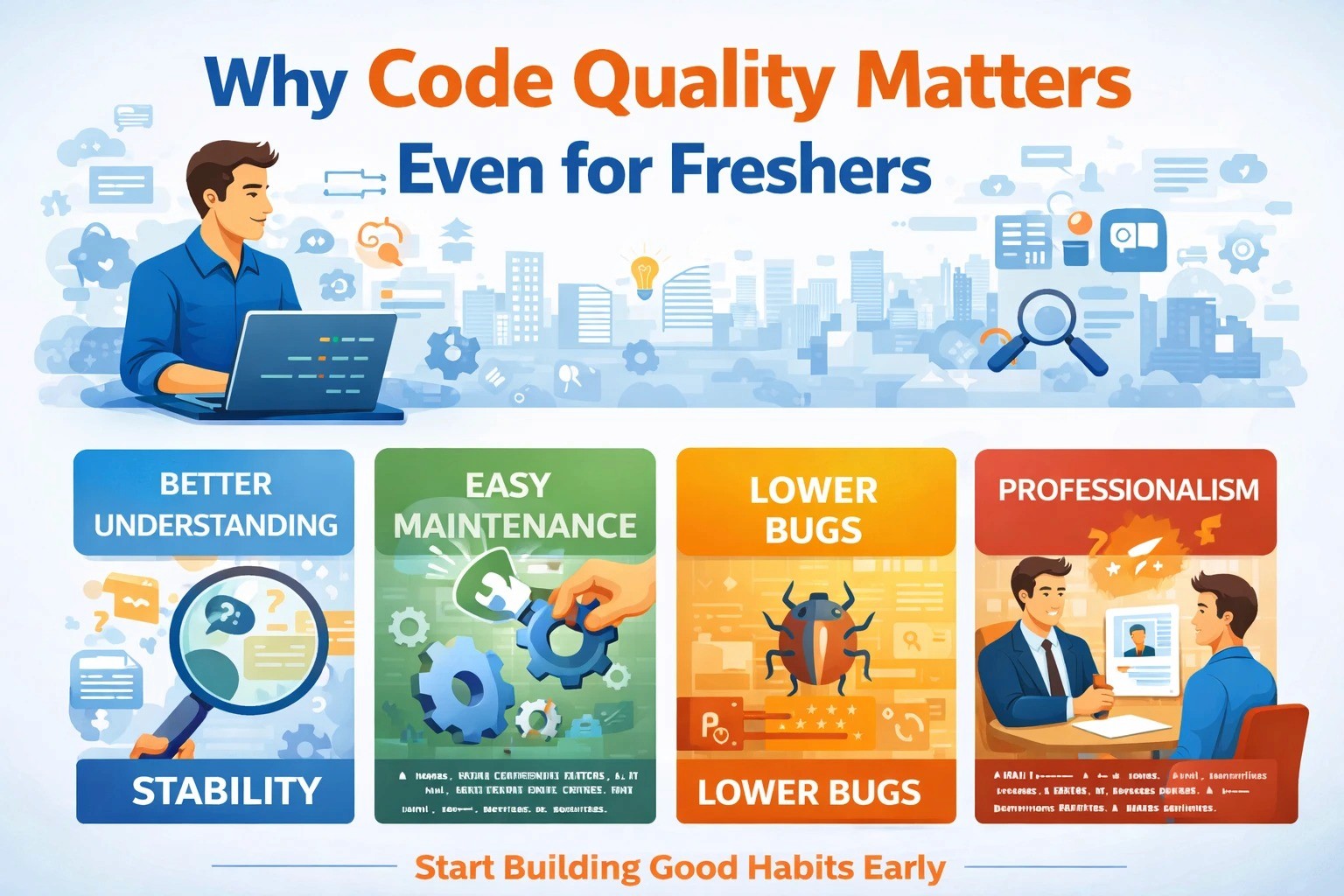
Many IT freshers believe that code quality is something only senior developers need to worry about. At the fresher level, they often focus only on making the code “work.” However, in the Indian IT industry, how you write code matters almost as much as whether it runs correctly. Code quality plays a major role in how freshers are evaluated, trained, and trusted at work.
In real IT projects, code is rarely written for one-time use. It is read, modified, tested, and maintained by multiple people over time. When a fresher writes unclear or poorly structured code, it becomes difficult for others to understand or extend it. This slows down the team and increases the chance of errors. Clean and readable code, even if simple, helps teams work smoothly.
For freshers, most initial tasks involve working on existing codebases. You may be asked to fix small bugs, add minor features, or test changes made by others. If you understand and follow good coding practices, it becomes easier to read existing code and make safe changes. Freshers who write clean code adapt faster to real project environments.
Code quality is also closely linked to problem-solving skills. Writing clean code requires you to think clearly, break problems into smaller parts, and use meaningful names and structure. These habits improve logical thinking. Managers often judge a fresher’s potential not by complex logic, but by how clearly the solution is written and explained.
Another important reason code quality matters is debugging. Poor-quality code is harder to debug and fix. When something goes wrong, unclear variable names, missing comments, and messy structure make it difficult to find the root cause. Clean code reduces confusion and saves time, especially in production support or tight deadlines, which are common in Indian service companies.
Many freshers assume that speed is more important than quality. In reality, consistently writing poor code slows down progress in the long run. Teams spend more time reviewing, correcting, and reworking such code. Freshers who focus on code quality earn trust faster and are often given more responsibility early in their careers.
Code reviews are a regular part of professional software development. During reviews, senior developers look for clarity, structure, and best practices. Freshers who write clean, understandable code receive better feedback and learn faster. Even when mistakes exist, good structure shows effort and learning intent, which managers appreciate.

Good code quality also helps freshers grow beyond their first role. Whether you move into backend development, testing, data engineering, or cloud roles, the habit of writing clean and maintainable code stays relevant. Tools and languages may change, but the principles of readability, simplicity, and consistency remain the same.
Another overlooked benefit of good code quality is confidence. When you know your code is clean and understandable, you are more comfortable explaining it to seniors, teammates, or interviewers. This confidence improves communication and makes collaboration easier.
In conclusion, code quality is not an advanced skill reserved for experienced developers. It is a basic professional habit that freshers should build from day one. Writing clean, readable, and well-structured code helps freshers learn faster, gain trust, and build long-term careers in the Indian IT industry.


