Feeling unsure despite daily learning doesn’t mean you’re failing. It means you’re still gaining experience—and confidence comes with time and practice.
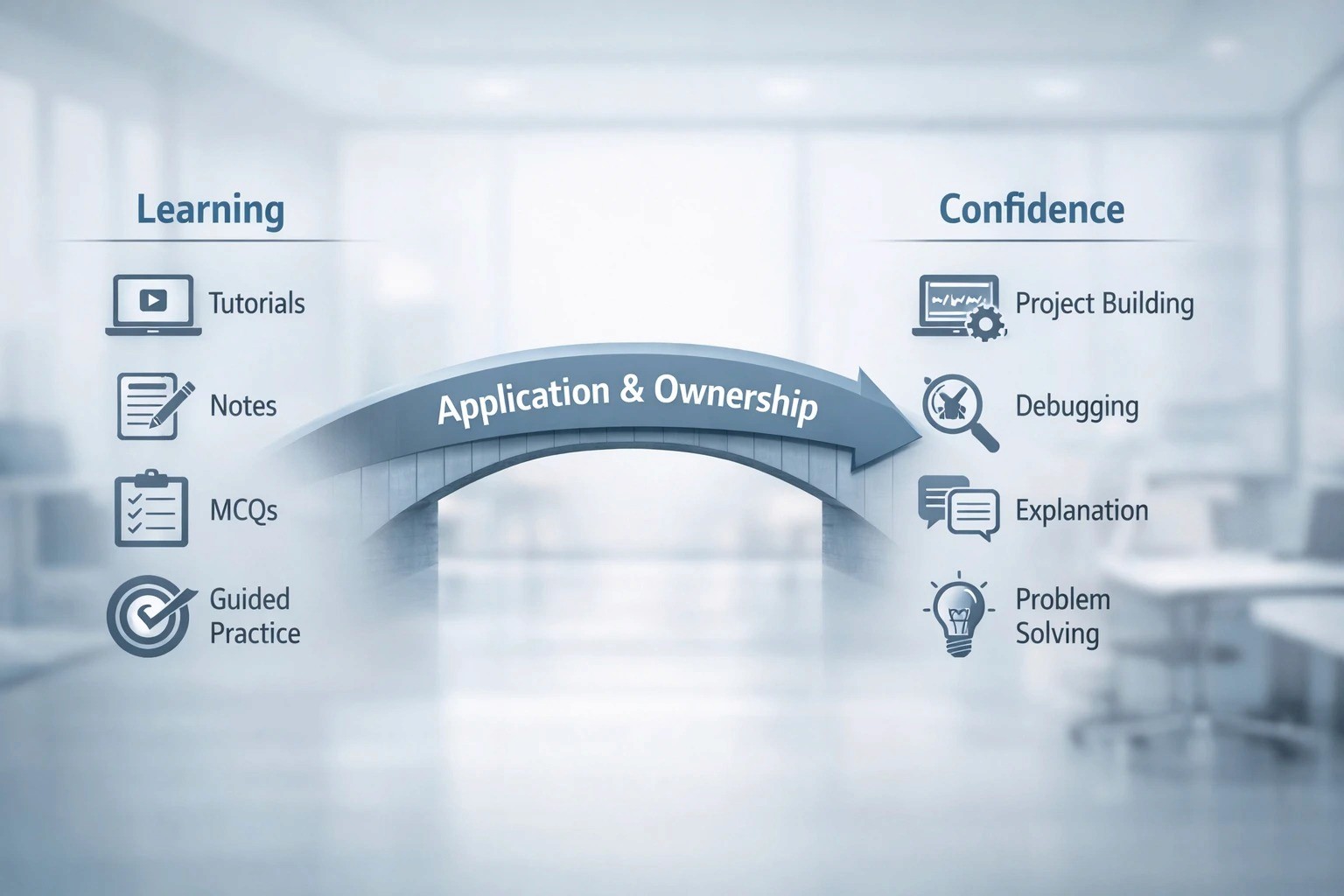
Learning gives you knowledge. Confidence comes when that knowledge survives real use.
The moment you apply what you’ve learned—without a script, without hints, without someone guiding every step—you start trusting yourself. Confidence grows quietly when you struggle, fix mistakes, and realise you can still move forward.
Every small task you complete on your own builds that proof and once proof exists, confidence follows naturally.
You’re Consuming More Than You’re Using

Many freshers spend hours consuming content but very little time using it independently.
Confidence doesn’t come from:
finishing a course
completing playlists
knowing definitions
It comes from:
writing code from scratch
getting stuck and fixing it
making decisions without hints
If most of your time is spent watching instead of building, confidence will stay low.
No Exposure to Uncertainty
Tutorials are clean. Real work is not.
In tutorials:
requirements are clear
solutions are known
errors are expected
In real tasks:
problems are vague
solutions are unclear
mistakes feel personal
If you haven’t practiced working in uncertainty, your mind panics during interviews—not because you don’t know enough, but because you’re not used to figuring things out alone.
You Don’t Yet Trust Yourself
Confidence is self-trust.
Right now, your mind may be thinking:
“What if I forget?”
“What if I’m wrong?”
“What if they ask something different?”
That fear exists when learning hasn’t crossed into ownership. Ownership comes from doing something end-to-end—even if it’s small.
Feedback Is Missing

Learning in isolation slows confidence.
When you don’t:
explain your work to someone
get feedback
defend your approach
you never test whether your understanding is solid. Explaining reveals gaps—and fixing those gaps builds confidence fast.
What’s Actually Missing
It’s not more hours, courses, or more theory.
What’s missing is:
small real projects
decision-making without guidance
debugging your own mistakes
explaining your work out loud
The Shift That Changes Everything
Instead of asking:
“What should I learn next?”
Start asking:
“What can I build with what I already know?”
Build something imperfect.
Explain it.
Fix it.
Repeat.
That cycle is where confidence comes from.
Final Reality Check
Learning daily is effort. However, confidence comes from application under discomfort.
Once your learning produces visible results—even small ones—confidence will stop feeling missing. It will feel earned.