
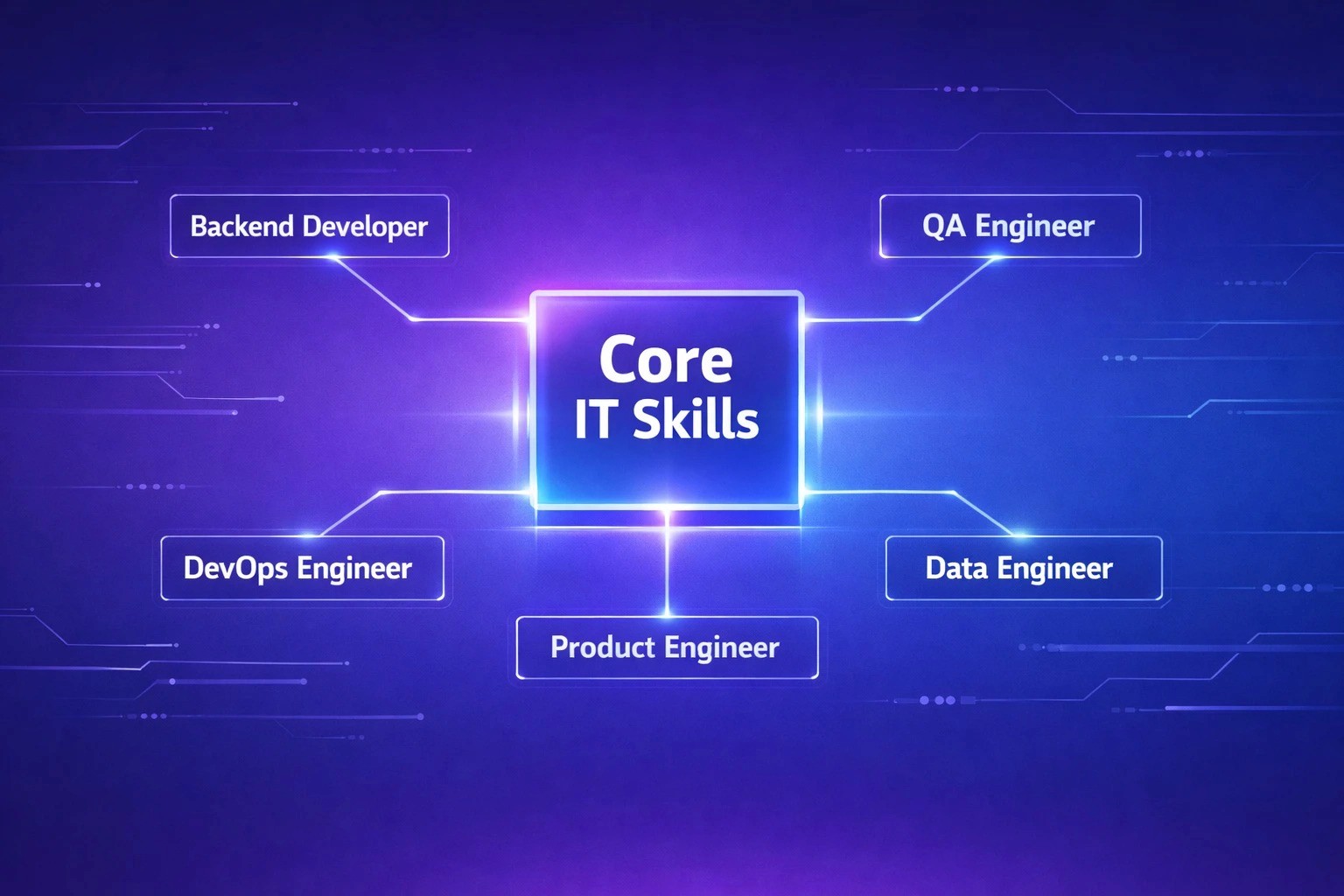
Skill-based training helps Indian IT freshers access multiple career paths like software development, QA, data, cloud, and cybersecurity through practical skills.
Introduction: Why IT Freshers Are Re-thinking Career Choices
Every year, lakhs of engineering and IT graduates enter the Indian job market. Campus placements are limited. Off-campus competition is intense. Most freshers face the same question:
“I have a degree, but what job can I actually get?”
This is where skill-based training changes everything. Instead of preparing for one fixed role, freshers can build core practical skills that open doors to multiple IT career paths. This approach is now preferred by both service companies and product companies in India.
What Is Skill-Based Training (In Simple Terms)
Skill-based training focuses on what you can do, not just what you studied.
It includes:
Hands-on tools used in real projects
Practical assignments instead of theory-heavy learning
Industry-style projects and workflows
Exposure to teamwork, deadlines, and problem solving
This is very different from traditional classroom learning, which is often exam-oriented and theoretical.
Why the Indian IT Industry Prefers Skills Today
Indian IT companies work on global projects. They need people who can:
Understand requirements quickly
Use tools from day one
Solve real problems with minimal training
Freshers who only have academic knowledge usually need long training periods. Freshers with job-ready skills become productive faster. That is why skills-first hiring is growing across:
Campus placements
Off-campus drives
Internships and apprenticeships
One Skill Set, Multiple Career Paths

A major advantage of skill-based training is flexibility. You are not locked into one role. With the right foundation, you can move across roles early in your career.
1. Software Development Path
If you learn:
One programming language properly
Basics of data structures and logic
Git and version control
APIs and debugging
You can apply for:
Software Developer (Junior)
Backend or Full-Stack Trainee
Product Engineering Intern
These roles exist in both service-based and product-based companies.
2. QA and Testing Path
If you learn:
Manual testing fundamentals
Test case writing and defect tracking
Basic SQL
Automation testing basics
You can move into:
QA Engineer
Automation Tester
SDET Intern
QA roles are often entry-friendly and offer strong growth for freshers.
3. Data and Analytics Path
If you learn:
SQL for data analysis
Excel and data cleaning
Data visualization and dashboards
Basic business metrics
You can target:
Data Analyst (Entry Level)
Reporting or BI Analyst
Operations Analyst
This path suits freshers who enjoy numbers and analysis more than coding-heavy roles.
4. Cloud and DevOps Path
If you learn:
Linux fundamentals
Networking basics
Cloud concepts
CI/CD and deployment basics
You can apply for:
Cloud Support Associate
DevOps Intern
Infrastructure Support Engineer
These roles are in high demand as companies move to cloud platforms.
5. Cybersecurity Path
If you learn:
Networking fundamentals
Security basics and common vulnerabilities
Log analysis and alerts
Security best practices
You can start as:
SOC Analyst (Level 1)
Security Analyst Intern
Compliance or GRC Trainee
Cybersecurity roles value strong fundamentals and discipline.
Campus + Off-Campus: Skills Work Everywhere
Skill-based training helps in both hiring routes.
Campus hiring: Projects and tools help you stand out among classmates.
Off-campus hiring: Skills compensate for lack of brand college or referrals.
Recruiters increasingly ask:
What projects have you done?
What tools have you used?
Can you explain how you solved a problem?
Internships: The Bridge Between Learning and Jobs
Internships are the fastest way to convert skills into job offers.
They help freshers:
Apply skills in real environments
Understand workplace expectations
Build confidence for interviews
Even short internships make resumes stronger and interviews easier.
How Freshers Should Think About Career Planning
Instead of asking:
“Which single job should I prepare for?”
Ask:
“Which skills give me the most career options?”
This mindset reduces stress and increases opportunities. Many professionals switch roles in their first 2–4 years using the same skill foundation.
Simple Next Steps for Freshers
Choose one primary skill track
Build 2–3 practical projects
Add internship or live project exposure
Prepare resume with skill keywords
Apply confidently to multiple role types
Conclusion: Skills Create Choices
Skill-based training does not limit you. It expands your options.
For Indian IT freshers, it is the most reliable way to:
Enter the industry faster
Explore different roles early
Build a stable, long-term career
If you want a clear learning roadmap or structured training plan aligned to current IT roles, start with skill-based learning and grow step by step.
