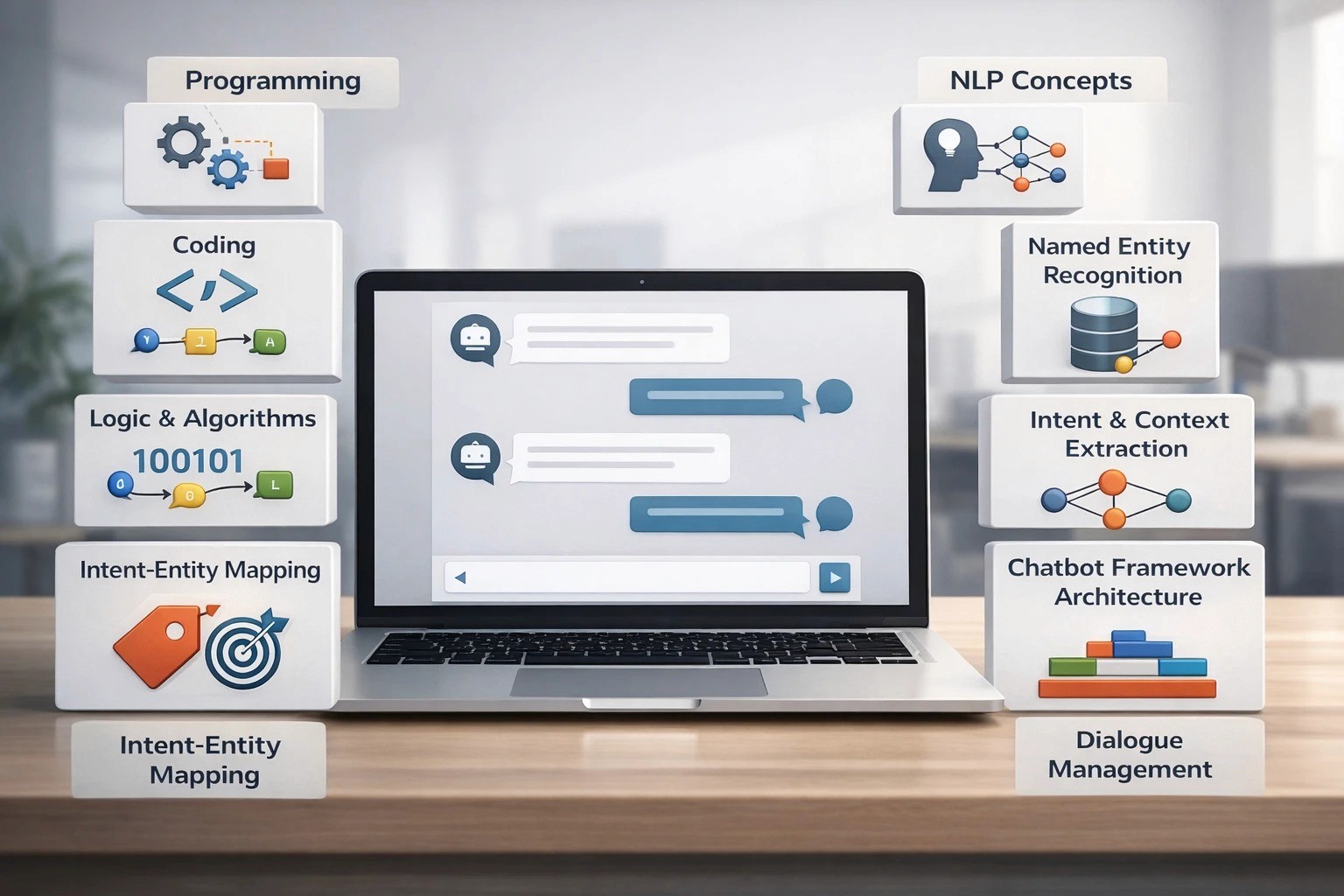
Chatbots & Conversational AI: Beginner Career Path
Artificial Intelligence is no longer a futuristic concept in the IT industry. In India, one of the fastest-growing and most accessible AI domains for freshers is Chatbots and Conversational AI. From customer support automation to internal enterprise tools, chatbots are now widely used by service companies, product companies, and startups alike.
For IT graduates who are confused about where to start in AI—or who feel traditional roles like development or testing are overcrowded—Conversational AI offers a practical and realistic entry point.
What Is Conversational AI (In Simple Terms)?
Conversational AI refers to systems that allow humans to interact with computers using natural language, either through text or voice. Common examples include:
Customer support chatbots on websites
Voice assistants for internal IT helpdesks
Banking, travel, and e-commerce bots
HR and onboarding assistants
These systems combine:
Basic programming
Natural Language Processing (NLP)
Rule-based logic
AI/ML models (in more advanced cases)
The good news is that you don’t need deep AI or machine learning expertise for many Conversational AI roles, making it a beginner-friendly career option.
Why Conversational AI Is Relevant for Freshers in India
Several industry trends make this field suitable for entry-level professionals:
Indian IT service companies increasingly build chatbots for global clients to reduce support costs
Enterprises adopt automation for HR, IT support, and customer interaction
Product companies embed chat interfaces into apps and platforms
Demand exists for both technical and non-technical roles
This has created multiple career paths, not just one narrow role.
Common Misconception: “AI Means Heavy Math and ML”
Many freshers avoid AI because they believe it requires:
Advanced mathematics
Complex machine learning models
Research-level expertise
In reality, most entry-level Conversational AI roles focus on building, integrating, testing, and improving chatbot systems, not inventing new AI models.
Career Paths in Chatbots & Conversational AI
Freshers can choose from three broad paths, depending on interest and background.
1. Technical / Developer Path
This path suits freshers who enjoy coding and problem-solving.
Typical Responsibilities
Building chatbot logic and workflows
Integrating chatbots with APIs, databases, or enterprise systems
Implementing NLP features using existing libraries or platforms
Debugging chatbot responses and flows
Skills Required (Beginner Level)
One programming language (Python or JavaScript preferred)
Basic understanding of APIs and JSON
Logical thinking and debugging skills
Fundamentals of NLP (tokenization, intent, entity concepts)
You are not expected to build AI models from scratch at the fresher level.
2. Low-Code / No-Code Chatbot Builder Path
This is a highly practical option for freshers who:
Are not strong coders
Prefer configuration and logic design
Want faster entry into IT roles
Typical Responsibilities
Designing conversation flows
Configuring intents and responses
Testing chatbot behavior
Working with business and support teams
Skills Required
Logical thinking
Understanding user conversations
Familiarity with chatbot platforms
Basic technical awareness (not heavy coding)
Many service companies use low-code platforms for client projects, making this path very employable.
3. Non-Coding & Functional Roles
Conversational AI teams also need professionals who focus on quality, usability, and data, not coding.
Common Roles
Conversation Designer
Chatbot Tester / QA
Bot Trainer / Analyst
Typical Responsibilities
Designing natural conversation scripts
Testing chatbot accuracy and edge cases
Analyzing user interaction data
Improving responses based on feedback
These roles are ideal for freshers with:
Good communication skills
Analytical thinking
Attention to detail
They often help connect business users with technical teams, ensuring both sides understand each other
Skills That Matter Across All Paths
Regardless of the role, companies look for:
Clear understanding of how chatbots work
Ability to think from a user’s perspective
Logical structuring of conversations
Willingness to learn and adapt
Soft skills such as communication and documentation are especially important in service companies.
How Freshers Can Start Preparing (Practically)
Instead of chasing advanced AI topics, freshers should focus on:
Understanding chatbot basics clearly
Building simple chatbot flows
Practicing real-world scenarios (support, FAQ, onboarding)
Learning how users actually interact with systems
Small, well-explained projects matter more than complex ones.
Job Titles Freshers Should Look For
Entry-level roles may not always mention “AI” clearly. Common job titles include:
Chatbot Developer
Conversational AI Engineer (Junior)
Automation Engineer
AI Support Engineer
Bot Analyst / Bot Tester
Reading job descriptions carefully is important.
Certifications: Helpful but Not Mandatory
Certifications from cloud or chatbot platforms can help demonstrate interest, but they do not replace:
Practical understanding
Hands-on exposure
Ability to explain concepts clearly
Employers generally prefer candidates who can apply their knowledge in real situations rather than those who rely only on certifications.
Final Thoughts
Chatbots and Conversational AI provide a realistic and flexible entry point into the AI domain for Indian IT freshers. The field offers multiple roles—technical, low-code, and functional—allowing graduates from different backgrounds to participate.
Success in this domain does not depend on advanced AI research skills. It depends on:
Clear fundamentals
Practical thinking
Understanding user needs
Continuous learning
For freshers looking to enter a growing, relevant, and adaptable IT career path, Conversational AI is worth serious consideration