
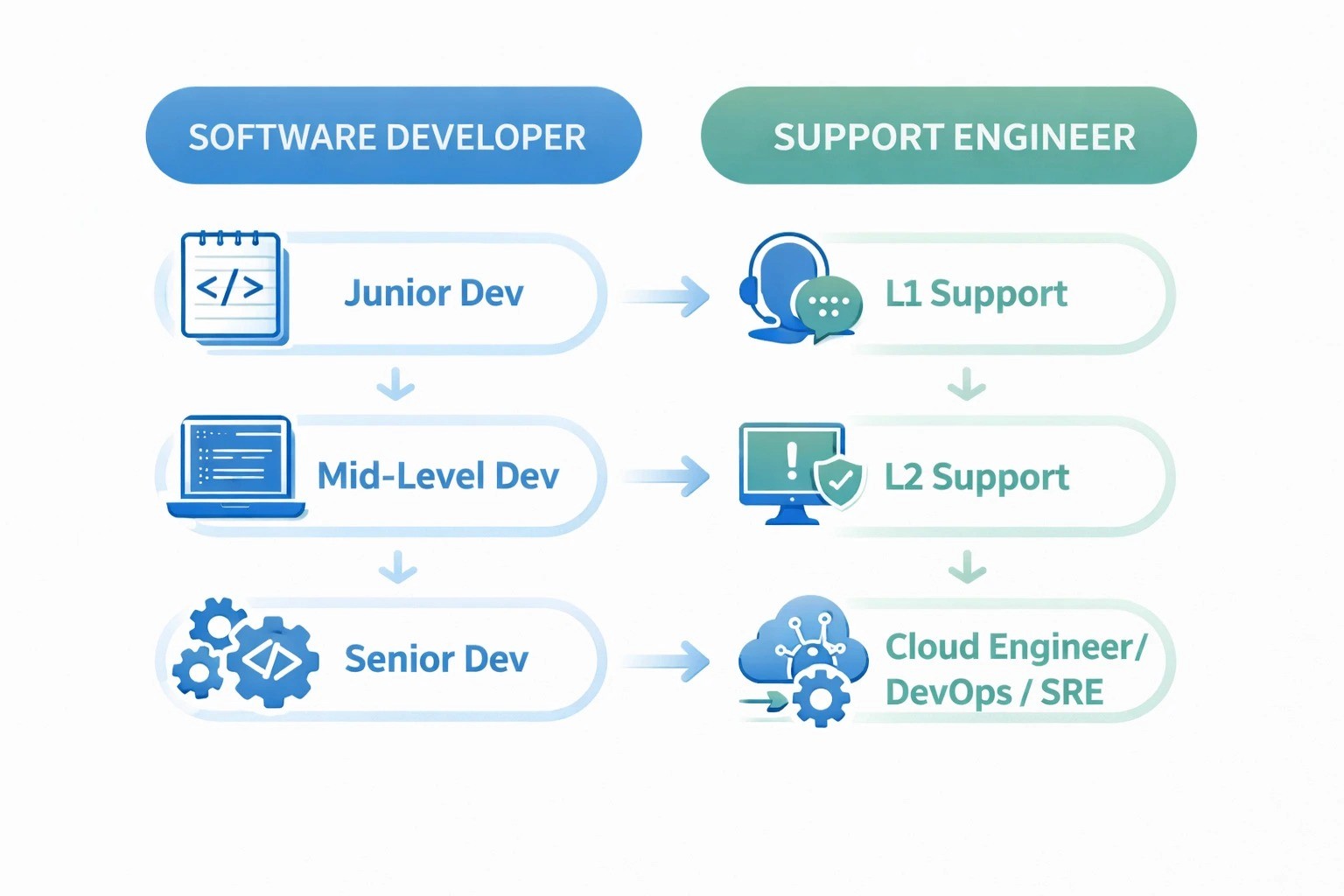
For many IT graduates in India, the first job offer often falls into one of two roles: Software Developer or Support Engineer. Both are valid entry points into the IT industry but the career growth journey after joining is not the same.
This article explains the real differences in a simple, honest way—based on how Indian service and product companies actually work.
Why Freshers Get Confused Between These Roles
During campus placements and off-campus drives, job descriptions are often unclear. Titles like Associate Engineer, System Engineer, or Technical Analyst can hide whether the role is development-focused or support-focused.
Many freshers accept offers quickly, without understanding:
Day-to-day work
Skill growth opportunities
Long-term career impact
Understanding this early helps you plan better.
What a Software Developer Role Looks Like
A Software Developer is involved in building or improving software systems.
Typical responsibilities include:
Writing and modifying code
Fixing bugs in applications
Understanding basic system design
Working with databases, APIs, and frameworks
Collaborating with testing and product teams
In Indian IT companies, freshers usually start as Junior Developers or Trainee Engineers. The learning curve can be steep, but skill growth is continuous.
This role strengthens problem-solving, coding, and logical thinking, which are long-term career assets.
What a Support Engineer Role Looks Like
A Support Engineer focuses on keeping systems stable and available.
Typical responsibilities include:
Handling tickets and incidents
Monitoring applications or servers
Troubleshooting issues in live environments
Following defined processes and SLAs
Working in shifts for client support
Support roles are common in large service companies and global delivery projects.
They offer early exposure to real systems and client environments.
However, core development work is limited in most support roles.
Career Growth: The Practical Difference
In the Indian IT market, developers usually grow by deepening technical skills, while support engineers grow through process and operational experience.
Developers progress toward senior engineer, lead, or architect roles.
Support engineers often move into senior support, team lead, or operations management roles.
Support is not a dead-end, but growth depends heavily on self-driven upskilling.
Without learning coding or automation, many support careers plateau.
Is Starting in Support a Bad Choice?
No. Starting in support is not a failure—especially when job opportunities are limited. Many freshers begin in support and successfully move into development later. The key difference is speed and intent. Freshers who treat support as a temporary learning phase and actively build development skills transition more easily within the first 2–3 years.
Those who delay often find switching roles harder later.
What Freshers Should Focus on (Regardless of Role)
No matter where you start:
Learn programming fundamentals seriously
Build small projects alongside your job
Understand how applications actually work
Improve problem-solving, not just tools
Keep your resume skill-focused, not role-focused
In today’s hiring environment, skills matter more than job titles.
Final Reality Check for Freshers
Software development roles offer faster and more predictable long-term growth
Support roles provide stability and exposure, but require planned upskilling
Early career decisions matter—but they are not permanent
The first 2–3 years are critical for shaping direction
Choosing support is okay. Staying there without upgrading skills is the real risk.

