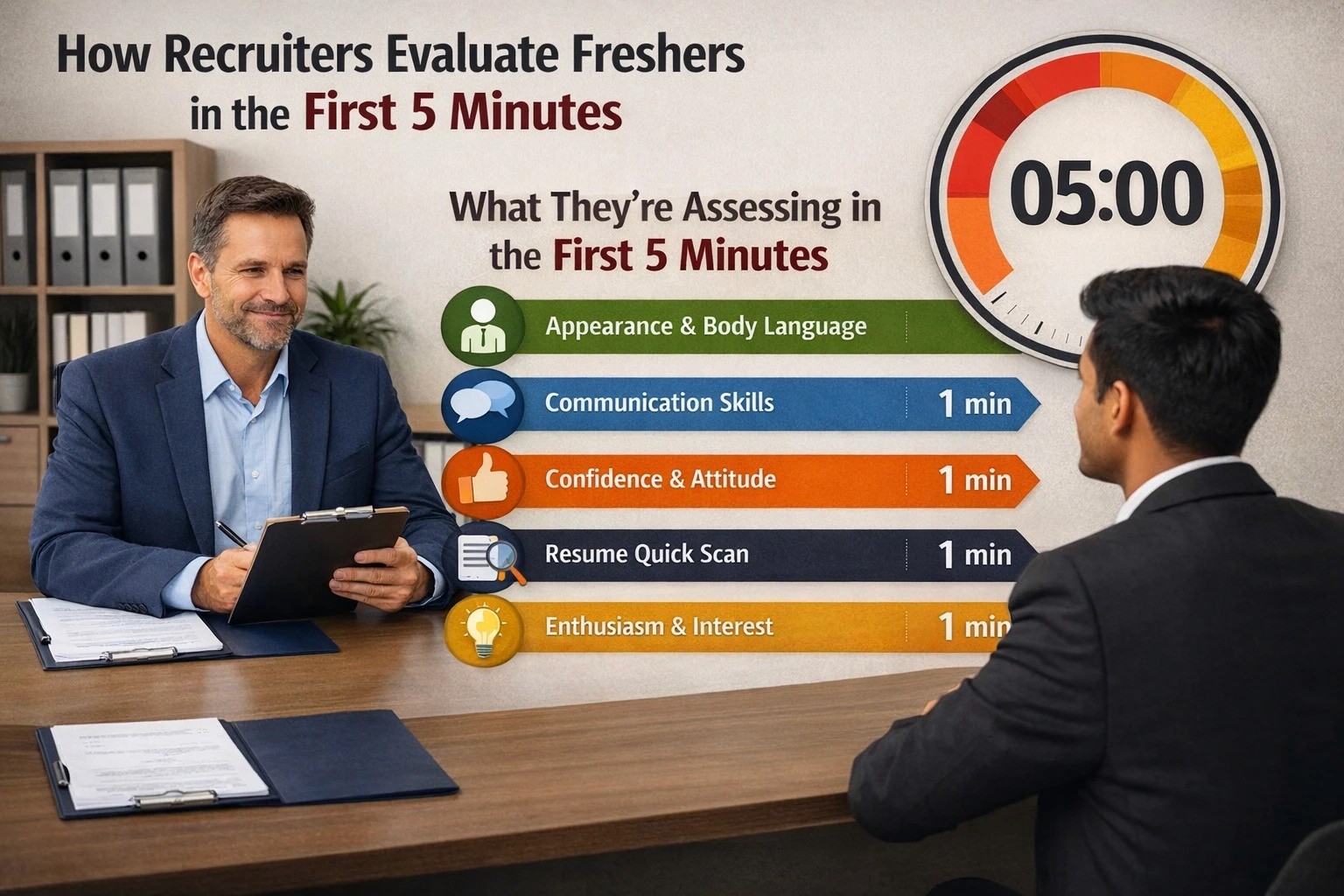
Most freshers assume interviews are decided by technical questions asked at the end. In reality, recruiters start forming opinions within the first few minutes—often before the first question is fully answered.
This is not unfair or random. It’s practical. Recruiters interview many candidates every day and use early signals to judge job readiness, communication, and trainability. For freshers, these signals matter even more than deep experience.
Here’s what actually happens in those first 5 minutes—and how you can prepare for it.
First Impression Is Not About Looks (It’s About Professional Readiness)
Recruiters are not judging fashion or brands. They look for basic professional awareness.
Within seconds, they notice:
Is the candidate appropriately dressed for an office environment?
Do they look alert, prepared, and present?
Is their posture confident but not arrogant?
A neat appearance, calm posture, and eye contact signal maturity. Slouching, nervous fidgeting, or avoiding eye contact suggests lack of confidence—even if knowledge is good.
What this tells the recruiter:
“Will this candidate be able to represent themselves and the team in front of clients?”
Communication Starts Before Technical Questions
The interview usually begins with:
“Tell me about yourself.”
This is not small talk. Recruiters are listening for:
Clarity of thought
Structure (not memorised lines)
Comfort in explaining things simply

Freshers who ramble, panic, or over-rehearse trigger concern. Those who speak calmly—even if imperfect—stand out.
What works well:
Brief background (education or training)
What you’ve learned or built
What kind of role you’re aiming for
What recruiters silently judge:
“Can this person explain their work to others?”
Attitude Matters More Than Knowledge at This Stage
In the first few minutes, recruiters quickly assess mindset:
Do you listen carefully before answering?
Do you accept clarification without getting defensive?
Are you open about what you don’t know?
Freshers often try to bluff. Experienced interviewers catch it immediately.
Saying:
“I’m not fully sure, but this is how I’d approach it…”
is far better than guessing confidently and being wrong.
What this tells the recruiter:
“Is this person coachable?”
Resume Ownership Is Checked Early
Recruiters often ask something simple from your resume:
A project you mentioned
A tool you listed
A certification or internship
They are not testing depth yet. They want to see:
Did you actually do this?
Can you explain it in your own words?
If you struggle to explain your own project, the interview confidence drops quickly.
Silent recruiter thought:
“If they can’t explain their own work, training will be hard.”
Energy and Interest Are Strong Signals
Within minutes, recruiters sense:
Are you genuinely interested in the role?
Or are you just attending interviews randomly?
Your tone, curiosity, and engagement show this clearly. Asking one relevant question or responding thoughtfully makes a difference.
Low energy, monotone answers, or visible disinterest often end the interview early—even if technical skills are decent.
What they assess:
“Will this person stay motivated after joining?”
What Freshers Often Get Wrong
Many freshers overprepare the wrong things:
Memorising definitions instead of understanding
Focusing only on coding questions
Ignoring communication and explanation skills
The first 5 minutes are about signals, not scores.
Recruiters are asking themselves:
Can I trust this person in a real team?
Will they learn without constant supervision?
Do they take responsibility for their learning?
How Freshers Can Prepare for the First 5 Minutes
Focus on these basics:
Practice explaining your project out loud
Prepare a natural “about yourself” answer
Learn to say “I don’t know” confidently
Work on calm, clear communication
Show genuine interest in learning and growth
These are skills—not personality traits—and they can be practised.
Final Takeaway
For freshers, interviews are not won by brilliance in the last question.
They are often decided early—by how you present yourself, explain basics, and show readiness to learn.
If you get the first 5 minutes right, recruiters become more patient, supportive, and interested in your potential.
That’s the real advantage freshers can build.